In Ward No. 3 Khudunabari of Arjundhara Municipality, Jhapa, time has reshaped landscapes, settlements, and livelihoods. Yet one issue lingered for decades, unresolved and quietly divisive. It was the officially mapped road linking Janata Secondary School in the west, passing through Aitabare Bazaar, and extending to Danabari in Ilam.
This road existed on paper, but it had vanished from the ground.
This old public path was once the "lifeline" of this region. According to local resident Govinda Niraula, this road was in continuous use until 1968. Back then, people would travel this very route all the way to the hills of Ilam, carrying rice and food supplies on their backs in traditional wicker baskets (dhakar). It was not just a road but a connector of communities and livelihoods.
That began to change in the early 1970s. Between 1973 and 1975, then Pradhan Pancha Khadga Bahadur Nembang opened a new, straighter route approximately 500 meters to the south through his private land. This alternative proved easier and more convenient, gradually drawing people away from the original mapped road.
As use declined, the old road faded into obscurity. Over time, nearly 50 adjoining landowners began occupying portions of the road land. It was cultivated, informally divided, and in some cases even bought and sold. What had once been a shared public asset slowly turned into contested private space.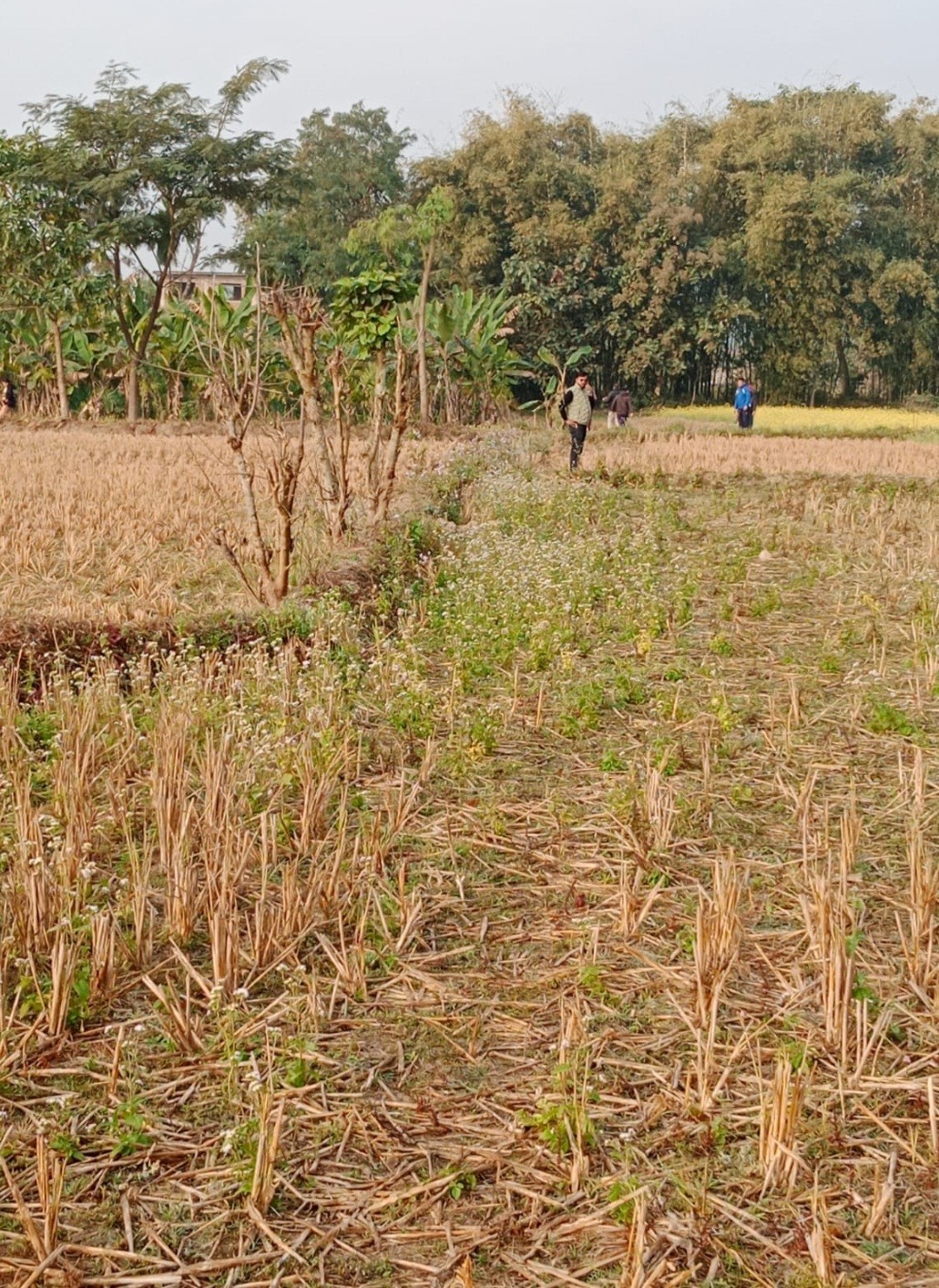
For nearly four decades, the road remained confined to government records. On the ground, a wall of distrust and conflict grew between the communities that needed the road and the individuals who were using the land for their own purposes.
As time passed, the settlement became denser, but the possibility of reopening the road grew narrower and narrower.
In 2005, a local resident, Narendra Ignaam, submitted an application to the then Village Development Committee to reopen the road. Soon after, Harinath Gautam and several other families filed another application, insisting that the actual condition of the land be verified before determining any outlet for the road.
The site was inspected, but no resolution was reached.
Each time the ward leadership changed; local residents would raise the issue of the road again. After the local elections of 2017, there were repeated discussions among elected representatives, community members, and other stakeholders, yet the problem remained unresolved.
Finally, in 2020, under the leadership of Indra Bahadur Chapagain (Babi) and Pradip Magar, the community that relied on the road submitted an application to the municipality’s judicial committee. The committee called all concerned parties for discussion. However, even there, no solution could be reached.
Later, the responsibility for resolving the conflict was handed over to the ward office itself. Even in the presence of the then municipal chief Hari Rana, repeated attempts were made, but no agreement could be reached.
After the second local elections in 2022, another application was submitted to the municipality’s judicial committee for the construction of the road. committee Following this, the committee coordinator, Khadgamaya Parajuli, reviewed the old case files. She concluded that this was a complex, multi-stakeholder conflict that could not be resolved through ordinary mediation alone.
Reflecting on the fact that the issue had remained unresolved for four decades through the same approaches, she considered whether a different method might work. With that in mind, on February 2, 2025 she recommended the case for facilitation to the Natural Resource Conflict Transformation Center, Nepal (NRCTC-N).
The facilitators from the organization conducted a detailed analysis of the conflict. On February 13, 2025, a preparation meeting was held under the chairmanship of Ward Chair Sitaram Bhattarai, where facilitation began using the spider-web process.
On April 23, 2025, an eleven-member spider group was formed from the parties involved in the conflict. Subsequently, from April 28 to 30, a three-day capacity-building and leadership handover training was conducted for the group.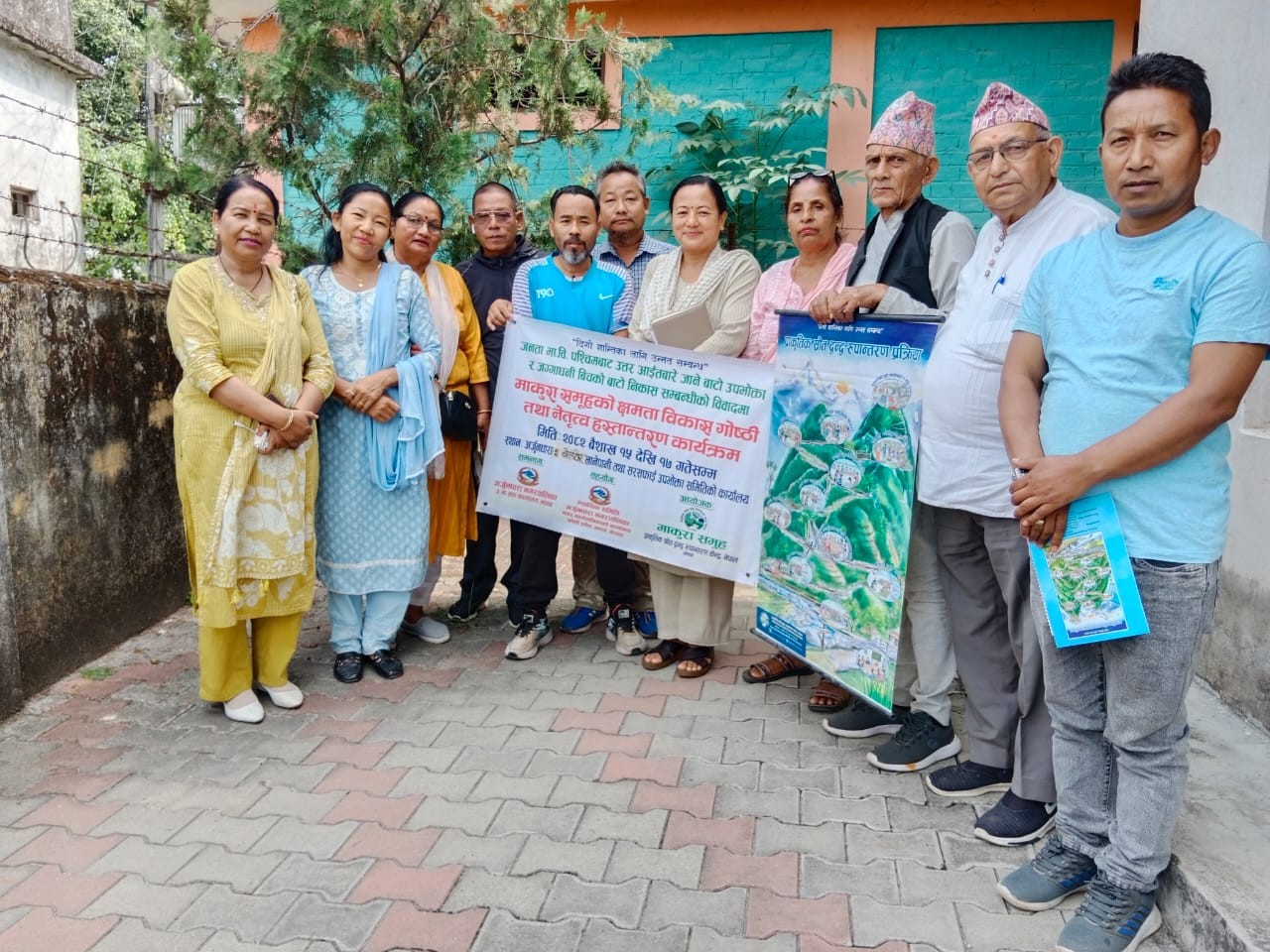
This marked a fundamental shift. The conflicting parties were no longer passive participants; they became facilitators of their own transformation.
According to Chandra Tamang, an executive member of the municipality, the way the spider group handled conflict appeared very different and far more effective compared to traditional discussions in the past.
According to her, the group maintained continuous individual and collective dialogue with local representatives, stakeholders, and the parties directly involved in the conflict. This approach helped build an atmosphere of trust. Rather than imposing decisions from the outside, the involved parties remained at the heart of the decision-making process.
The open dialogue, fueled by the active participation of all sides, gradually steered the conflict toward mutual understanding. People joined the process voluntarily. Tamang noted that tasks which local representatives and judicial committees struggled to resolve began to find solutions through the spider group's facilitation. This success has helped establish the spider as an effective and exemplary model within the village.
Indra Bahadur Chapagain (Babi), who had been raising his voice for a road access for years, says, "the spider group carefully examined the concerns and problems of the parties, layer by layer, in a very detailed manner. Dialogue conducted with everyone’s participation shows that even the most difficult conflicts can be transformed."
After eight months of intensive dialogue, dozens of meetings, and extensive engagement among the parties, a historic 13-point agreement was reached on November 10, 2025. All parties, stakeholders, and representatives of the local government were present in the joint meeting where the agreement was endorsed.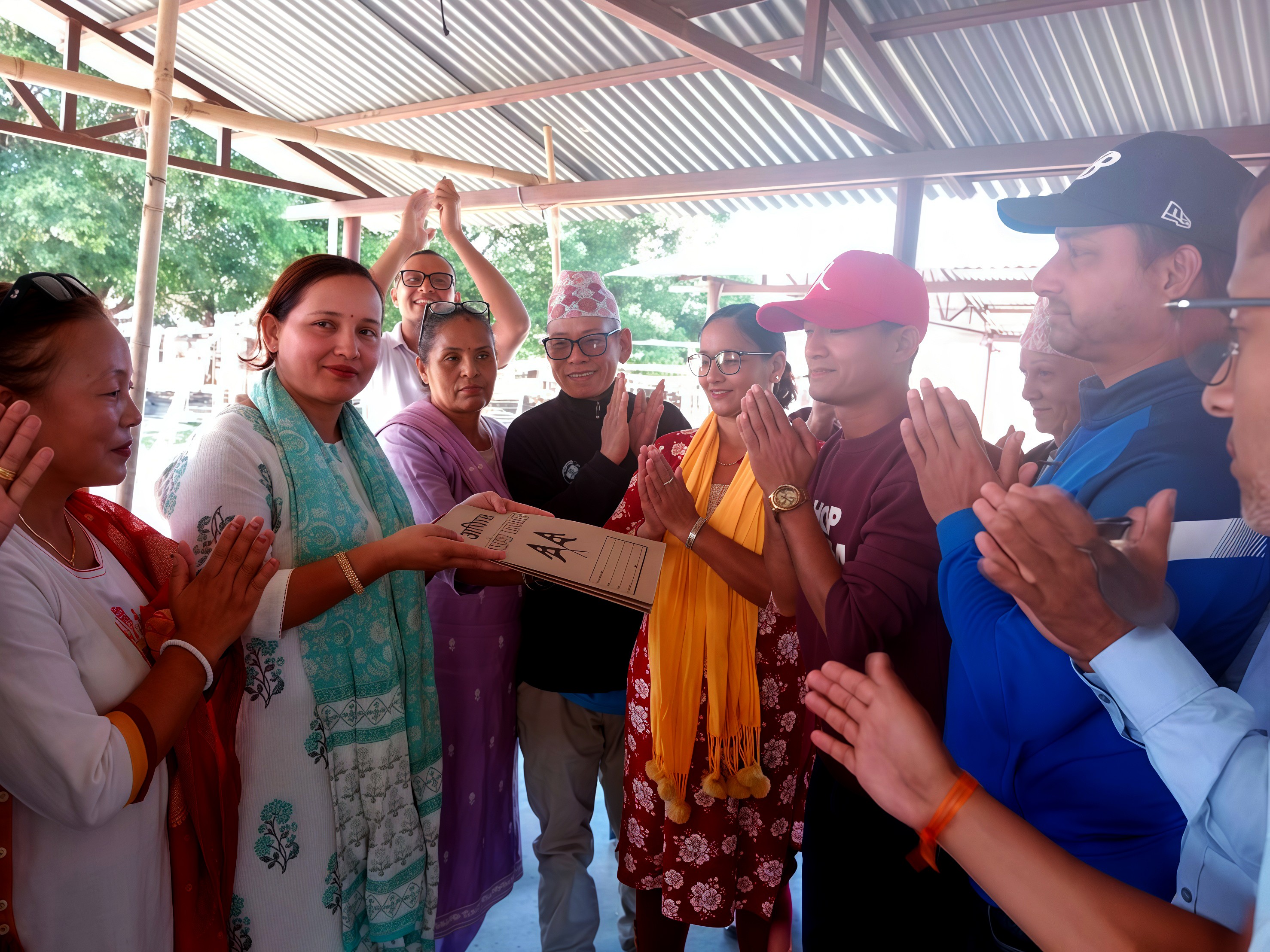
The effectiveness of this process is clearly reflected in the experience of spider group coordinator Renuka Khawas. She says, “At the beginning, I was personally against opening the road because 3,390 square feet (10 dhur) of our land worth 2 million rupees was going to be affected. However, through this process, I realized that we would eventually have to give up government land sooner or later. I convinced my own family and neighbors. Today, we are finally free from the accusation of encroaching on the road."
To implement the agreement, a five-member team was formed under the leadership of Ward Chair Sitaram Bhattarai. On December 19, 2025, a joint team from the District Survey Office and the municipality conducted a land measurement, defined the road according to the map.
The municipality and ward office spent approximately NRs. 200,000 to clear the track using a JCB. By February 22, 2026, the construction of a road approximately 1.5 kilometers long and 20 feet wide was completed.
Local youth entrepreneur Purna Kumar Yonghang filled potholes along a 300-meter stretch of the road at his own expense immediately after the track was opened, in order to make movement easier. He says, “the government takes time in its procedures, but we cannot wait. I did it gladly.”
Visible changes have begun to emerge since the road opened. The management of the Khudunabari Cattle Market—the largest in Jhapa, where transactions worth millions take place—has become much easier. Transportation of goods is now more convenient, and students can avoid busy main roads by taking this safer route.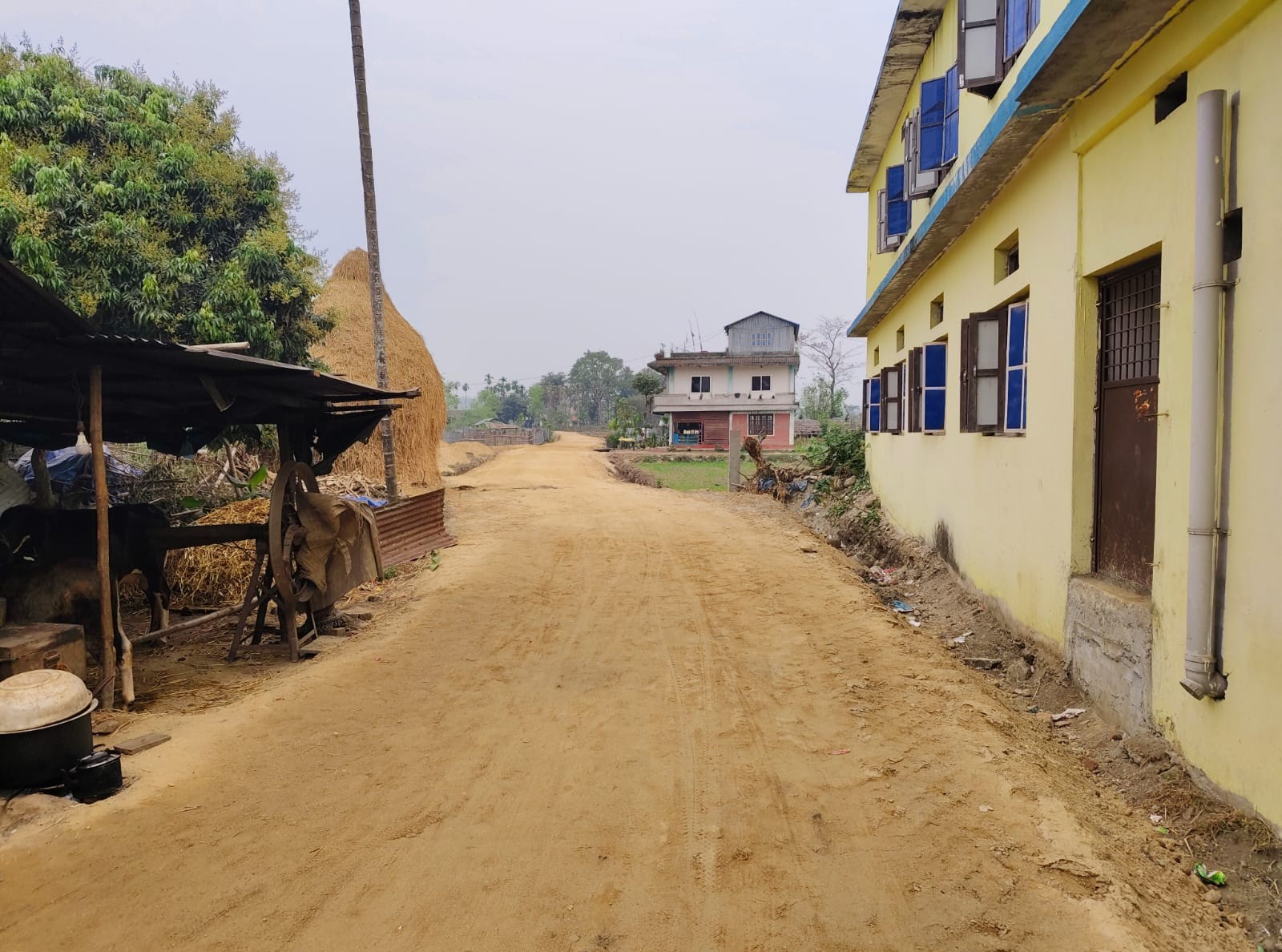
This new road has simplified the daily lives of 40% of the local population and is contributing to economic prosperity and development. According to Tikaram Budhathoki, the land has now been converted into valuable residential plots. Land prices have skyrocketed; property that was valued at NRs. 100,000 per dhur (One dhur = 16.93 sq. meter) due to lack of access is now being traded for NRs. 400,000 per dhur. Furthermore, house construction projects that were previously stalled due to the lack of a road are now moving forward.
Families who had faced the accusation of "selling out the road" for years have finally been cleared of those charges.
Harinath Gautam, who had long been accused of building his house right on the road, shares: "My heart used to sink whenever I heard the surveyors were coming. Now, the measurement is done and everyone is satisfied. The space to build my house is cleared, and I've been liberated from years of fear. I can finally sleep in peace."
"No one had to stay angry; the conflict was transformed with ease. The fact that the conflicting parties themselves formed the 'Spider Group' and took the lead to find a breakthrough is the greatest success of this process." -Sitaram Bhattarai, ward chairperson.
Judicial Committee coordinator Khadgamaya Parajuli adds, "It was not just a road that was built here, the life of the community itself has changed. It is easy to anticipate that there will be even greater benefits in the future."
This success in Khudunabari is not just about building a road. It is a victory of process and cooperation. No one had to lose; everyone won. The local people themselves found the solution to the problem.
Today, this road directly benefits 60 households, while more than 1,000 community members are indirectly benefiting from it. A 40-year silence has been broken. Where there were once obstacles, the foundation for development and prosperity has now been laid. A path of trust and peace has also opened in the hearts of the community.
The walls of anger, blame, and mistrust that had built up over years have been torn down. A long-cherished dream of the community has finally come true. The local government has also committed to allocating additional budget in the coming year for upgrading the road.
This case has taught a clear lesson that, where laws and authority alone are not enough, inclusive dialogue and community-led approaches like the spider-web can become powerful tools for transformation. In Khudunabari, a road was not just rebuilt. A community found its way forward.