Shivahari Community Forest stretches across the border of Belauri Municipality Ward No. 1 and Punarbas Municipality Ward No. 4 in Kanchanpur district. Today, it stands as a picture of peace, lush greenery, and careful management—a living testament to dialogue, collaboration, and coexistence.
Yet, just a few years ago, this forest was far from tranquil. It was entangled in a web of mistrust, bitterness, and constant conflict. Beneath its green canopy, a 'wildfire' of misunderstanding had been smoldering for two decades. Conflict over ownership, use, and management involved three different groups and persisted relentlessly, tearing apart the very fabric of community life.
People living in the same village avoided each other. Complaints and lawsuits over trivial matters became routine. The forest, once a shared resource, had become a battlefield.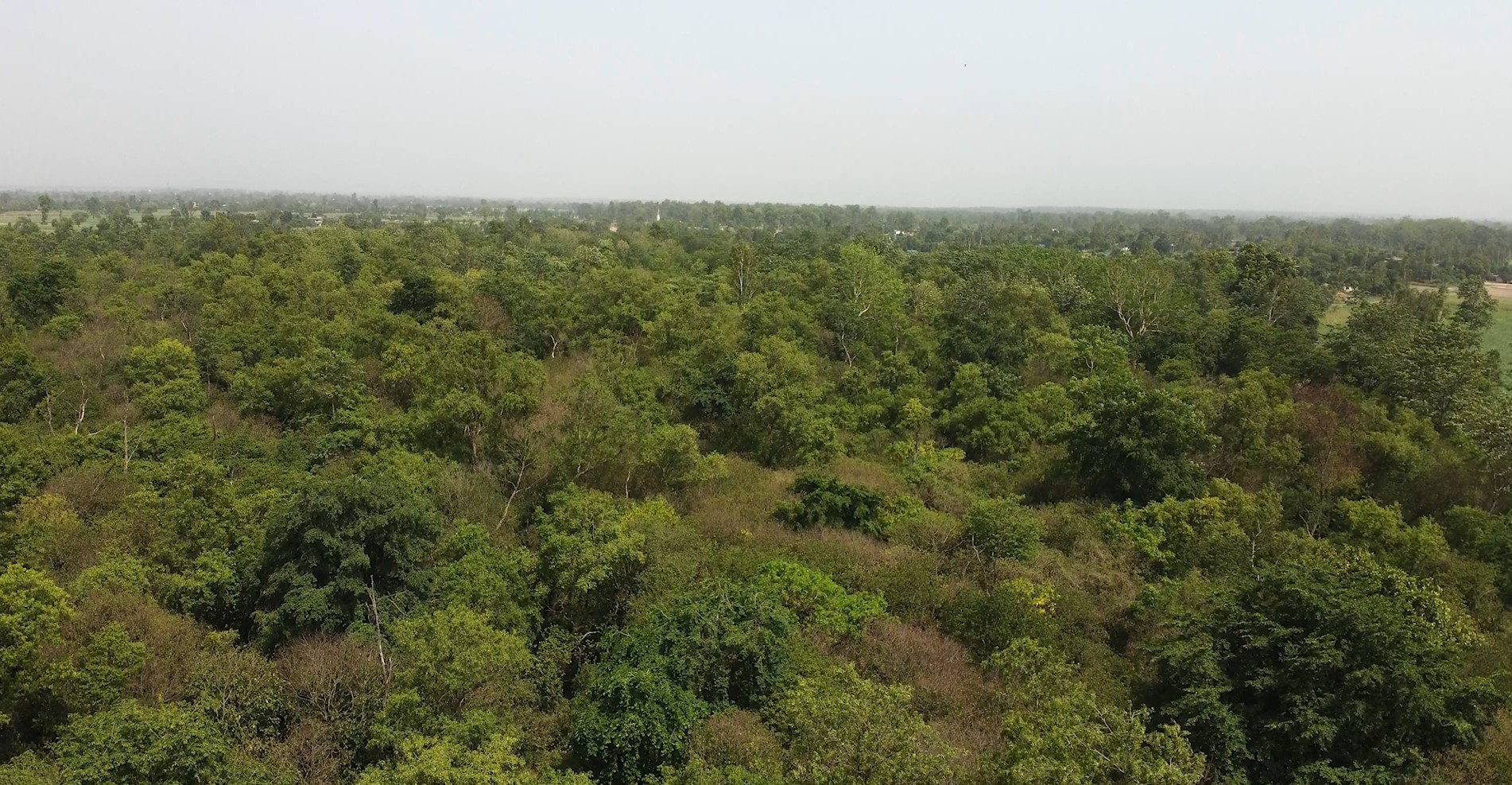
The root cause of the conflict was approximately 20 hectares of land within the Shivahari Community Forest. Within this area, the Janak Triveni Women's Group had spent years planting trees and nurturing the forest across 8 hectares. Their stance was firm: "This forest is ours because we raised it."
However, when the Shivahari Community Forest User Group was officially registered in 2000 (2057 BS), the area managed by the Triveni Women’s Group was also included within the community forest boundaries —planting the seeds of conflict.
In the midst of this, the Laxmi Sports Youth Club stepped forward with a demand to construct a playground within the forest. Meanwhile, the Community Forest Users' Committee maintained a rigid stance: "All forest areas must remain under the Committee’s sole ownership."
All three parties became increasingly stubborn in their positions. Dialogue ceased, and the forest could neither be renewed nor conserved collectively.
The Triveni Women’s Group began using the forest at their own discretion, claiming they were the ones protecting it. Exploitation increased more than conservation.
Even minor issues, such as cutting grass or collecting firewood, triggered a chain of complaints and legal cases. The conflict did not remain confined to the local level. It escalated from the municipalities to the sub division and division forest offices. For matters that could have been settled with a fine of five hundred rupees, people started hiring vehicles for five thousand rupees just to file cases at the divisional forest office.
The aim was not the fine but to get the opposing party jailed. Small issues kept turning into major conflicts.
Despite repeated attempts of mediation by local government and the forest office, no lasting solution emerged. Agreements existed only on paper, and conflicts deepened, even taking on political dimensions. Households were split. Communication broke down. Situations even escalated to physical confrontations. Development stalled. Budgets were frozen. The forest kept deteriorating.
Around 2019 (2076 BS), a glimmer of hope finally emerged. The Natural Resource Conflict Transformation Center-Nepal (NRCTC-N) intervened in this complex conflict. Initially, an effort was made to bring all parties to the same table, testing whether the conflict could be resolved through simple dialogue.
But it was not easy. It was difficult even to bring the women's group, the forest committee, and the youth club to sit in the same meeting. The initial agreement could not be put into practice. Following this, the Divisional Forest Office formally requested the Center to take the lead in the transformation process.
On July 28, 2021 (Shrawan 13, 2078 BS), a preparation meeting was held including major stakeholders and representatives of the conflicting parties. This marked the beginning of a multistakeholder conflict transformation process known as the "Spider Web" (Makura Jalo) approach.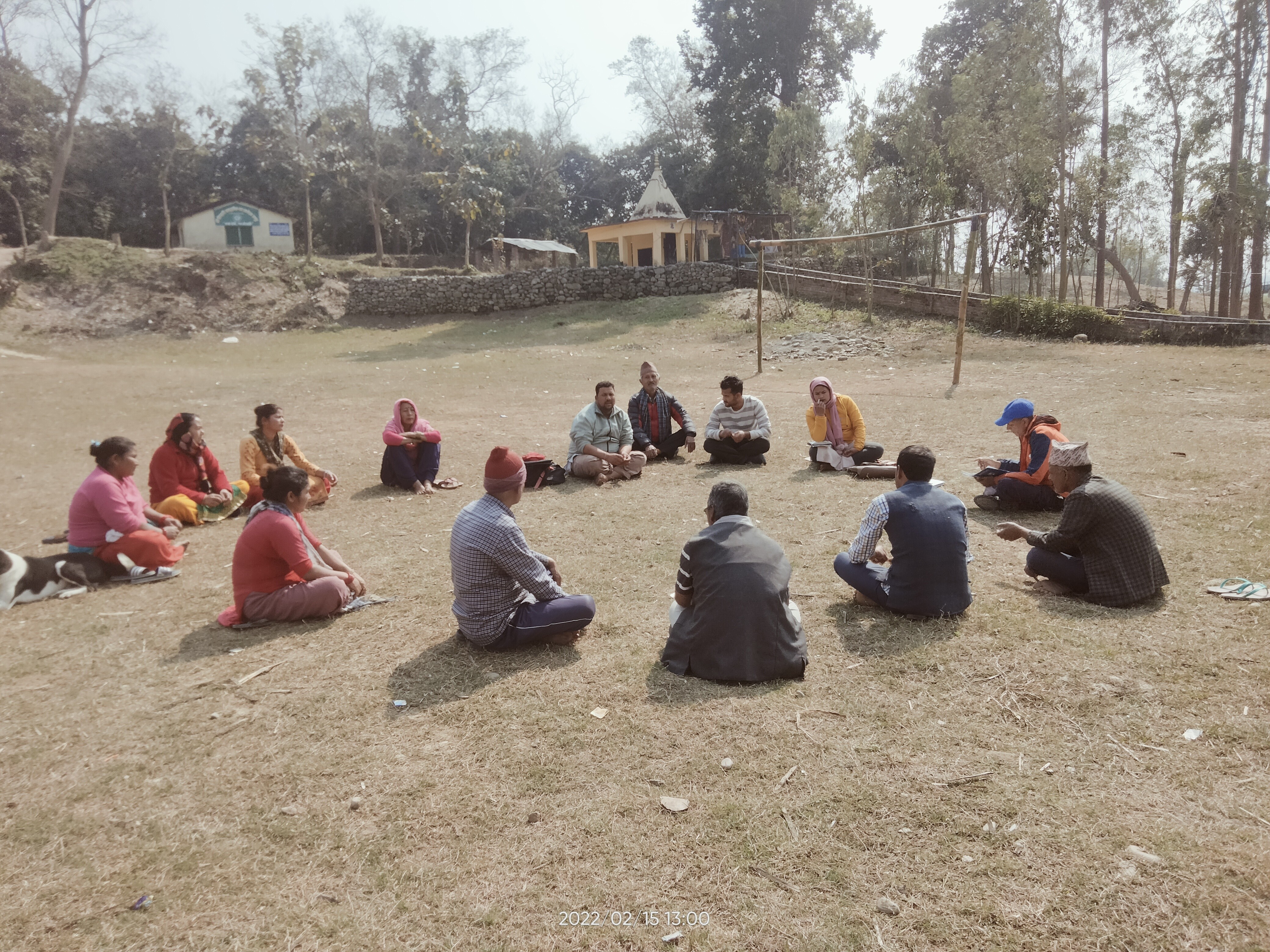
Representatives who had not spoken to each other for years finally began sitting at the same table. The conflict was mapped out, and the parties involved—along with the relevant stakeholders—were identified. With the participation of all sides, a 'Spider Group' was formed.
Parties who initially couldn't even stand to be in the same room gradually began to listen to one another. Meetings that once started with insults and verbal abuse transitioned into debates and logical arguments, eventually turning toward mutual understanding.
Through continuous dialogue, patience, and understanding, the atmosphere gradually shifted. After nearly a year and a half of persistent effort, a historic six-point agreement was reached between the parties on September 10, 2022 (Bhadra 25, 2079 BS).
Following the agreement, 265 households in the village became collective users of the community forest. The new 13-member executive committee included 8 women representatives. Additionally, the 8 hectares of forest where the Triveni Women's Group had carried out plantation were brought under collective ownership.
Tej Bahadur Khadka, Chairman of the Shivahari Community Forest User Committee, says, “Had this agreement not been reached, the forest would still not be renewed today. The playground, too, would have remained nothing more than a dream.”
According to him, previously, if one party entered the forest, the other would show up with sickles to threaten them. Lawsuits were filed even for cutting a small amount of grass. That is no longer the case today. "The 'Spider Group' created an environment for dialogue. Flexibility, patience, and tolerance made this transformation possible."
The impacts of the agreement were immediate and visible.
After 23 years, the forest was renewed at the Divisional Forest Office. Revenue of 314,000 rupees was paid to the Government of Nepal. For the first time, 165 cubic feet of timber was sold, generating an income of 350,000 rupees. An inclusive committee was formed. A playground was built. Wire fencing worth 1.3 million rupees was installed. The forest boundary was determined using GPS. Tree plantation and bush clearing began in the forest. Support from the provincial government and local authorities became easier. Budgets that had been halted until the conflict was transformed also started to flow again.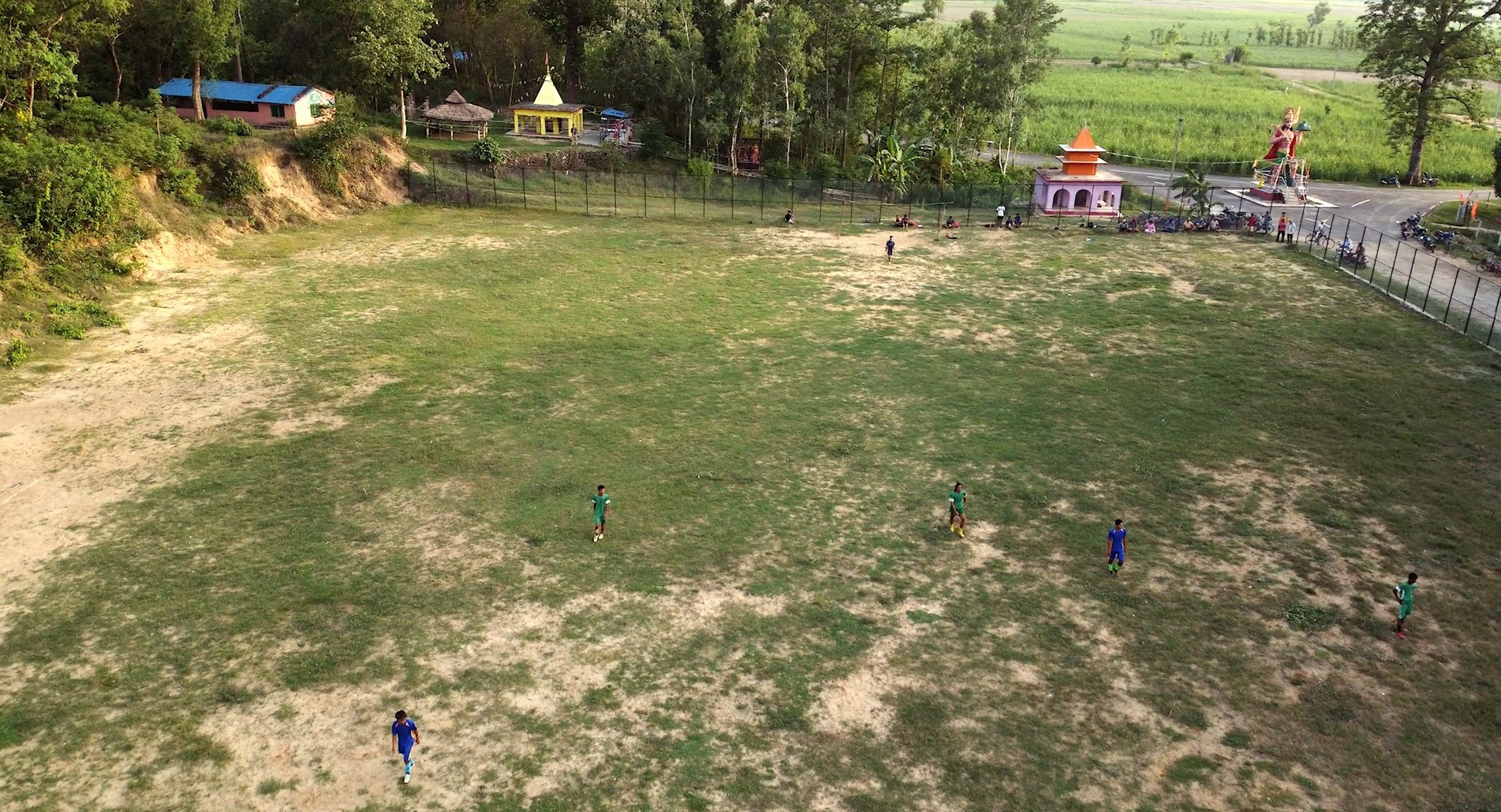
Former adversaries now collaborate. They sit together in meetings, share tea, and plan collectively. Dinesh Yadav, Sub-Divisional Forest Officer of Kunda, notes, "Earlier, if I had tea with one side, the other would be upset. After the agreement, for the first time, I have been able to serve tea to everyone together—peacefully."
Emotion still glistens in the eyes of Sharada Ghimire, a member of the Spider Group. She says, "tears came to my eyes when a conflict that hadn't been settled for 20 years finally reached a transformation. Today, every user is happy. The forest is no longer neglected; everyone is protecting it. Seeing this makes all the struggles feel worthwhile."
Local government and other stakeholders are encouraged by this success. They believe that if this process can be implemented elsewhere, it would contribute significantly to establishing peace in society.
Bhuliya Devi Rana, Deputy Mayor of Punarbas Municipality, and Dhan Bahadur Bishta, Ward Chairperson of Belauri-1, share a common sentiment: “Had the conflict not been transformed, there would have been neither budget nor development. Following the agreement, the construction of the playground, fencing, and roads became possible with the support of the municipal and provincial governments. The users are now united. The complaints have stopped.”
Today, Shivahari Community Forest is more than just trees. It is a symbol of reconciliation and shared responsibility. Where lawsuits once dominated, agreements now prevail. Where conflict stalled progress, playgrounds, roads, and inclusive plans flourish. Transparent accounting and collective management have replaced mistrust. A 1.2-million-rupee budget from the provincial government blacktopped the border road.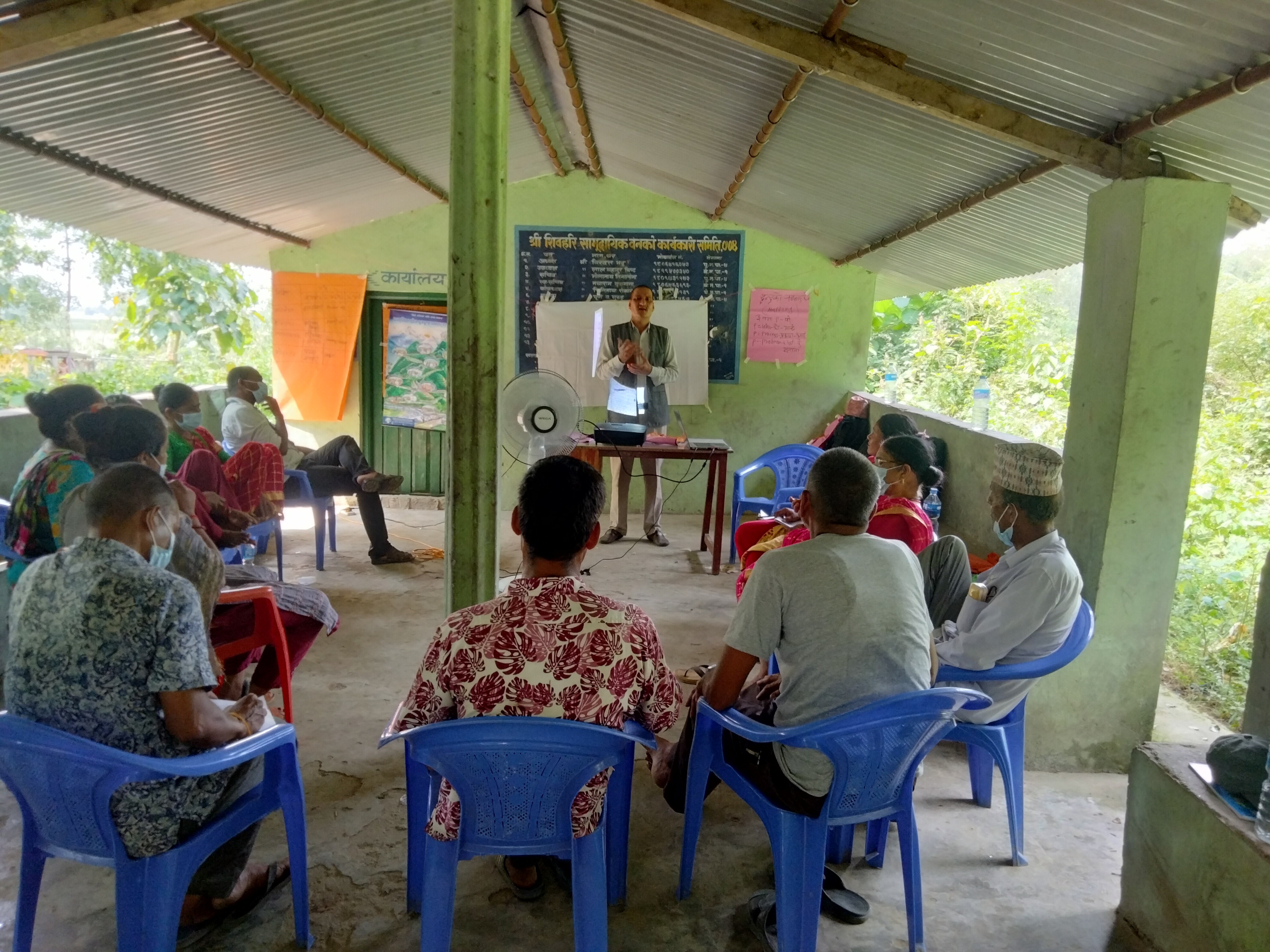
The conflict, which stretched on for nearly two decades, was ultimately transformed through the facilitation of the Spider Group. Shivahari Community Forest now stands truly green— not just with trees, but with relationships. The transformation of the Shivhari Community has sent a clear message that no conflict is too deep to be bridged by dialogue. When people choose conversation over confrontation, most entrenched conflicts can be transformed. This, indeed, is the greatest success of the Shivahari Community Forest.