Danuwari Village, Hariwon Municipality-9, Sarlahi District.
Today, the village has a wide, paved road. Vehicles move smoothly. Children heading to school no longer find mud clinging to their shoes, nor does dust sting the eyes of those going to the market. Even ambulances carrying the sick no longer get stuck on the way.
This transformation isn't just about the roads. After a conflict that had been knotted up for five decades was finally transformed, the entire lifestyle of the village changed. This has bridged not only the physical paths but also the distance between hearts.
Until a few years ago, the road from Danuwari to Dumrighari would turn into a quagmire as soon as the monsoon began. Forget ambulances, even ordinary vehicles could not pass through. But the root of the problem ran far deeper than mud.
About fifty years ago, some local residents closed the road that appeared on the official map in front of their homes and instead provided an alternative route through their own land. As time passed, people began using that alternative path. Houses gradually faced toward it, and the settlement continued to expand along the new route.
The commonly used road that had been in practice since 1973 (2030 B.S.) was never included in the official government map. In reality, one road continued to function, while on paper, another existed. This contradiction weighed heavily on Danuwari community for decades.
In 2008 (2065 B.S.), when the Hariwan Village Development Committee attempted to lay gravel on the commonly used road, the landowners protested. The question arose, "Why work on a road that isn't on the map?" Following this, the conflict began to take on a broader social dimension.
If the commonly used road was closed, many families would lose their only means of access. Conversely, opening the road according to the official map would affect the houses and courtyards of the landowners. The conflict dragged on for years. Relationships grew strained and distant.
Following the Provincial Assembly elections in 2017 (2074 B.S.), the conflict intensified further. The provincial government allocated a budget for road upgrading and paving; however, the fundamental question remained: "Which path should be constructed?"
Legally, authorities were bound to follow the road shown on the official map. Yet villagers wanted the road constructed along the route they had been using for years. This issue split the entire settlement into two opposing factions, known simply as the “north” and the “south” of the road.
Communication between neighbors ceased entirely. Even members of the same family became estranged due to the road conflict. Residents from the northern side viewed newcomers from the south as “conspirators sent to work against us.” Those in the south harbored similar suspicions. Mutual trust had completely collapsed. Tensions escalated to the point where the threat of violence became imminent.
To resolve the conflict, the municipality, the ward office, and both former and current elected representatives made repeated efforts. Meetings were held and agreements were reached, but none were ever implemented.
The current ward chairperson, Kokilananda Upreti, even arrived with a JCB machine to forcibly open the road. However, local residents strongly resisted. The situation escalated to physical confrontation.
In the end, the development budget allocated for upgrading nearly two kilometers of road was frozen. Progress came to a halt, and hearts grew even farther apart.
As the conflict continued to intensify, Hariwan Municipality formally requested the Natural Resource Conflict Transformation Center–Nepal (NRCTC–Nepal) to facilitate the transformation process.
From here, Danuwari’s story took a new turn.
Starting on December 28, 2023 (Poush 12, 2080), NRCTC launched a scientific and step by step multi stakeholder conflict transformation process based on the 'Spider Web' methodology.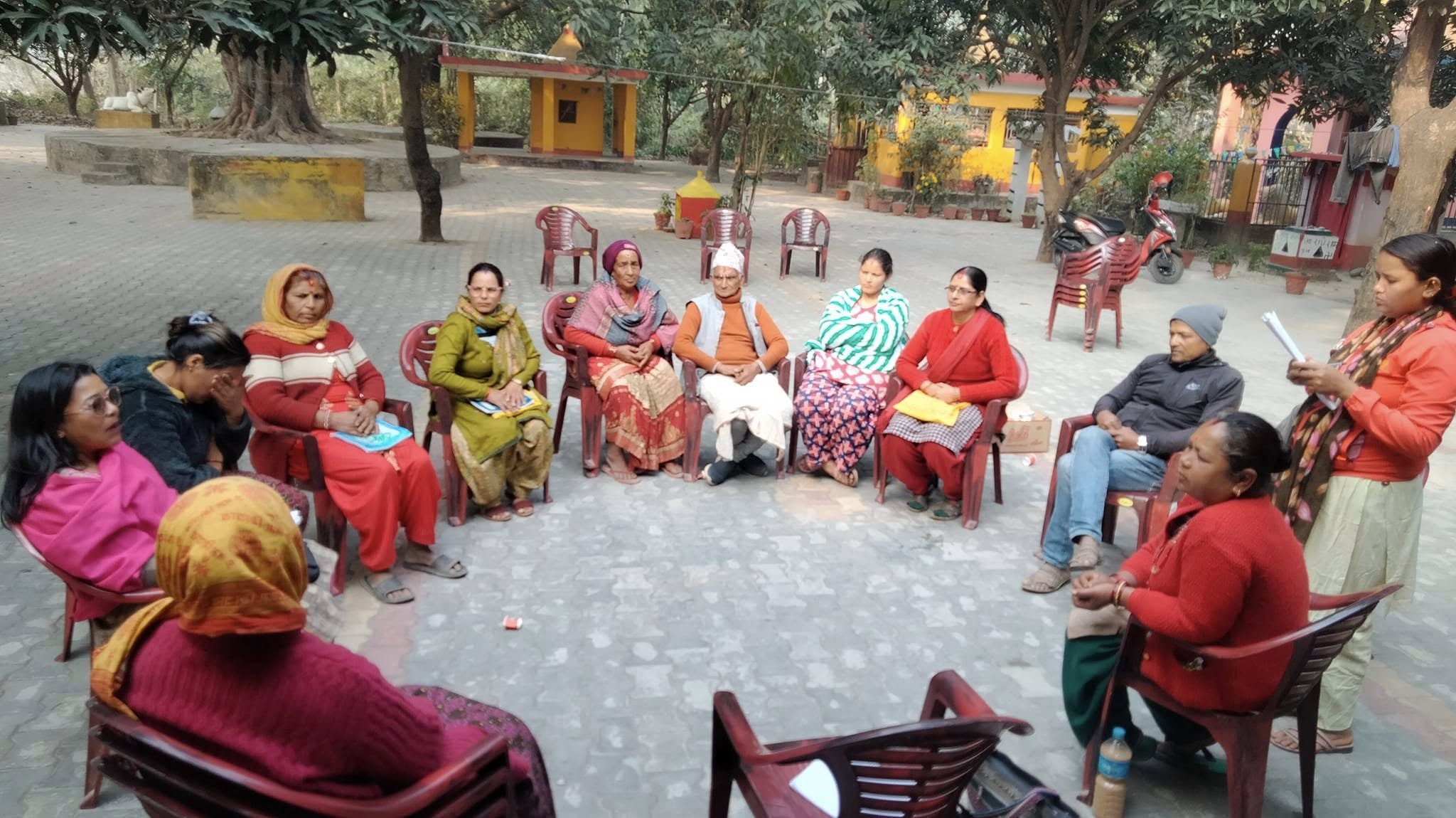
Ten trusted local individuals, acceptable to all parties involved in the conflict and willing to commit time, were brought together to form the “Spider Group.” This group received training in capacity building, dialogue, and leadership transfer. The core aim was not to impose solutions from outside, but to empower the community itself to lead the transformation process.
Under the leadership of the Spider Group, a mutually agreed process proposal was endorsed by all sides. Following this, through separate and joint discussions, the root of the conflict and the key issues requiring transformation were identified.
Healing a wound that was nearly fifty years old was not easy. Yet instead of relying on external pressure, solutions were sought through the community’s active participation.
Local resident Saraswati Mahat reflects, “If the facilitators from NRCTC had not come, there would surely have been violence here. The situation could even have turned deadly. After the spider process began, the whole atmosphere changed.”
Continuous dialogue began to open the doors of possibility. Following extensive discussions, the community took the initiative to seek its own alternatives. These options were met with open deliberation, and with all parties demonstrating flexibility, a win-win solution was finally achieved.
On June 20, 2024 (Asar 6, 2081), a five-point agreement was reached in the presence of all stakeholders and parties involved in the conflict.
An agreement was reached to maintain both the mapped route and the traditionally used path at a width of 14 feet each. Both parties agreed to contribute the necessary land, with a commitment to upgrade both roads through the joint cooperation of the municipal and provincial governments.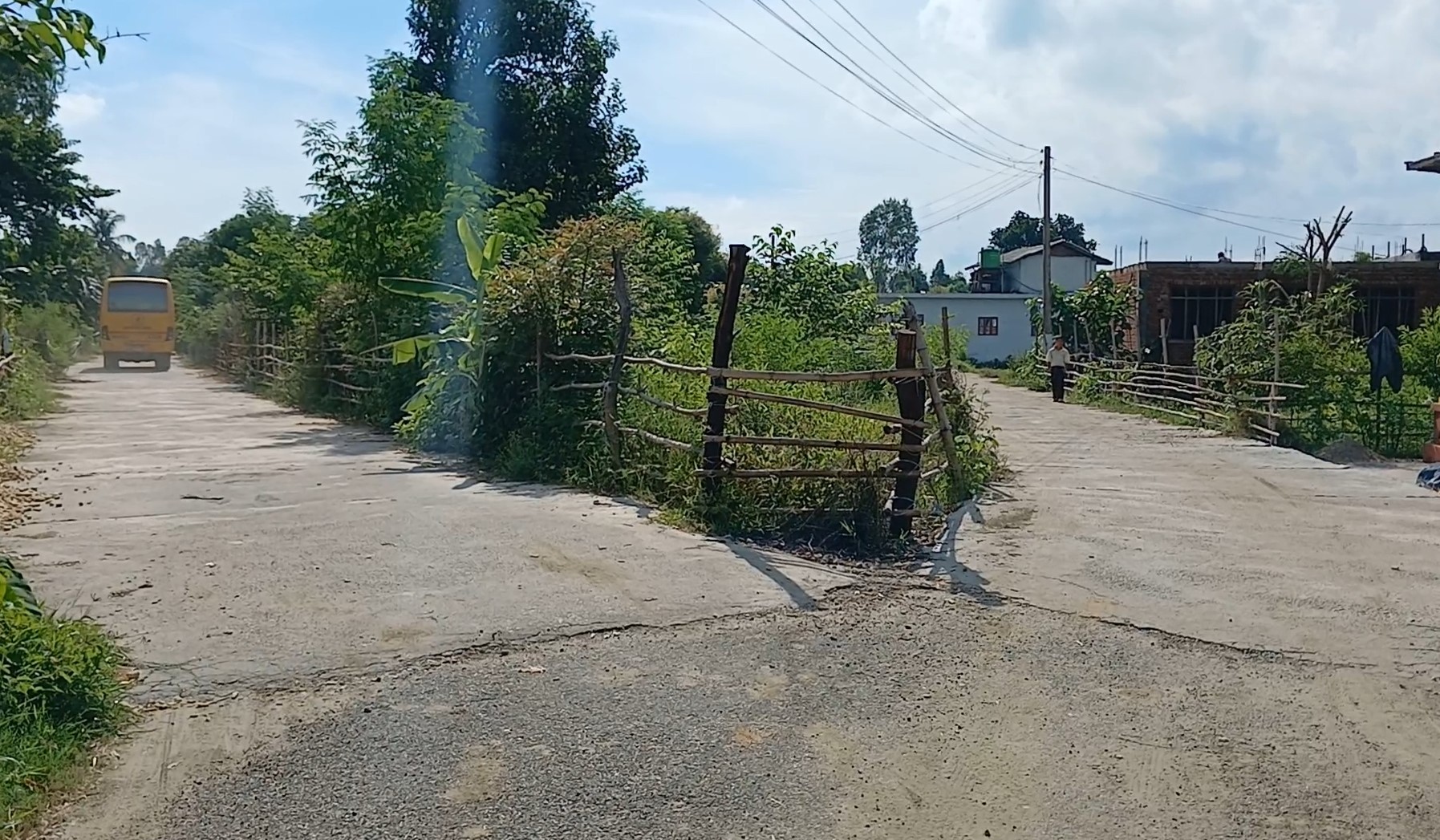
Once the community reached an agreement, the government acted without delay. Today, both roads have been paved and widened
Chudamani Dahal, a local resident who once uprooted the boundary markers installed by the local government, shared a poignant reflection today: “The Mayor, Deputy Mayor, and community leaders all intervened, yet no resolution was reached. However, the Spider Group managed to satisfy everyone—us, the community, and the local government. Today, the road is open on both sides, all thanks to the Spider Group’s efforts.”
Today, the paved road has done more than just transform the landscape of Danuwari; it has fundamentally eased the lifestyle of its people.
School vehicles now reach right up to people’s doorsteps. Commuting to the marketplace has become easier and more convenient. But the greatest change has been the “meeting of hearts.” Neighbors who hadn’t spoken to each other for years now sit together on the same resting platform, sharing tea and laughter. Social harmony has been restored.
Former Ward Chairperson Sitaram Pokharel says, "I also made many attempts, but I couldn’t succeed. This conflict transformation process worked by bringing everyone together. The conflict that once stood on the brink of violence has now been transformed into a concrete road. Not just the path, but hearts have been connected as well."
This experience from Danuwari has become an important learning for Hariwan Municipality. There are many multi stakeholder conflicts within the municipality that have stalled development. However, this case has proven that the 'Spider Web Method' offers a more sustainable path to transformation than the use of force or litigation. Consequently, the municipality has now adopted a policy to apply this same approach in other conflicts as well.
Deputy Mayor Harimaya Ghalan says, “This conflict transformation process is truly the art of mending broken hearts. It has shown that through continuous dialogue, even the most difficult conflicts can be transformed.”
The web of dialogue woven by the 'Spider Group' has transformed years-old misunderstandings. Social conflicts are not confined to papers or land—they are tied to emotions, relationships, and coexistence. When the community listens, understands, and receives proper guidance, even old knots can be untied. Danuwari has proven that decisions made through community leadership and participation are more sustainable than those imposed by administrative orders.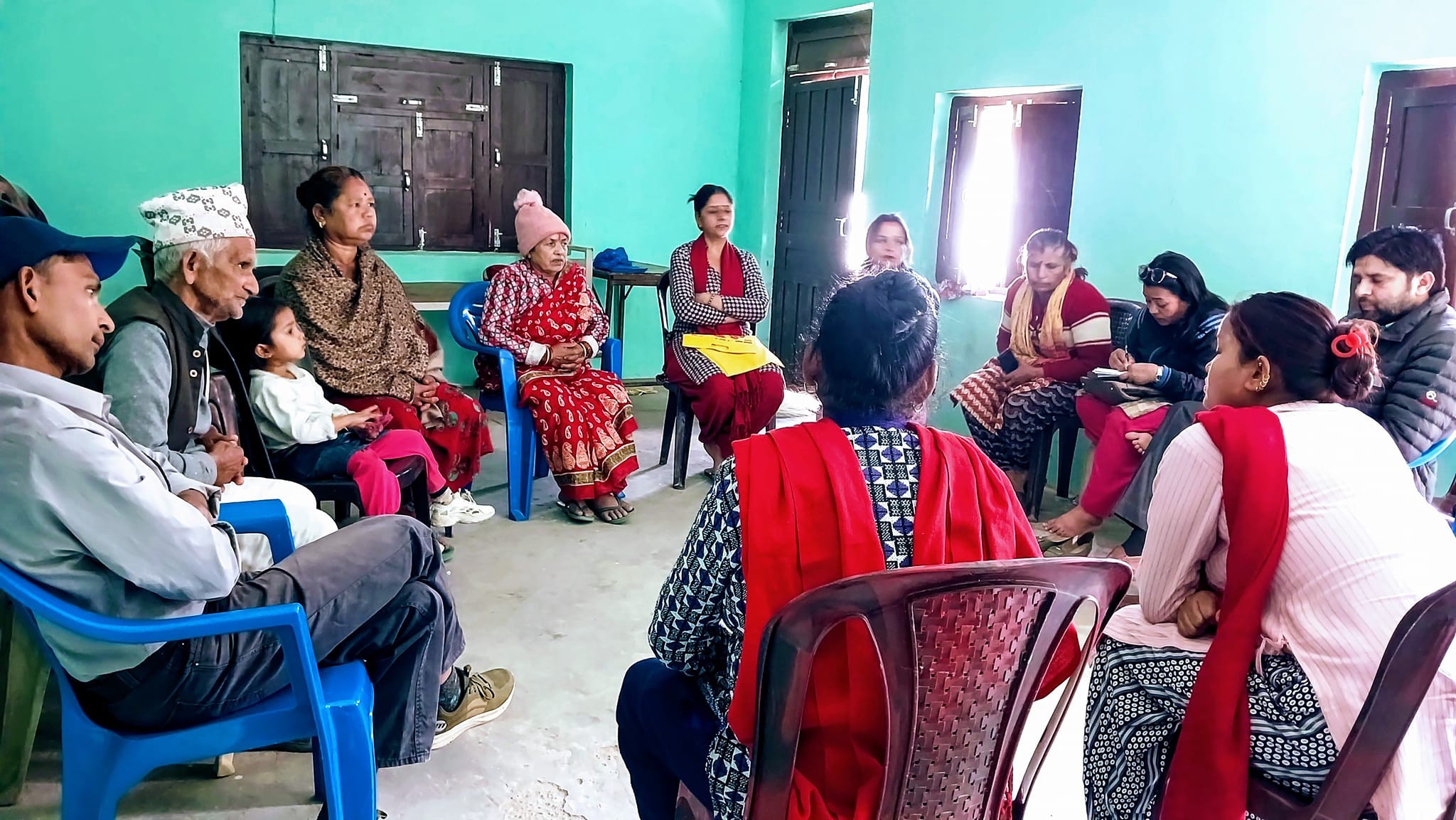
Ultimately, the five-decade-old conflict transformation has written a new chapter in development. The concrete laid in Danuwari is not just a layer of cement and gravel—it is the foundation of unity, understanding, and mediation. Danuwari has shown that solutions to problems are possible not only in courts or offices but also from the village’s own gathering spaces.