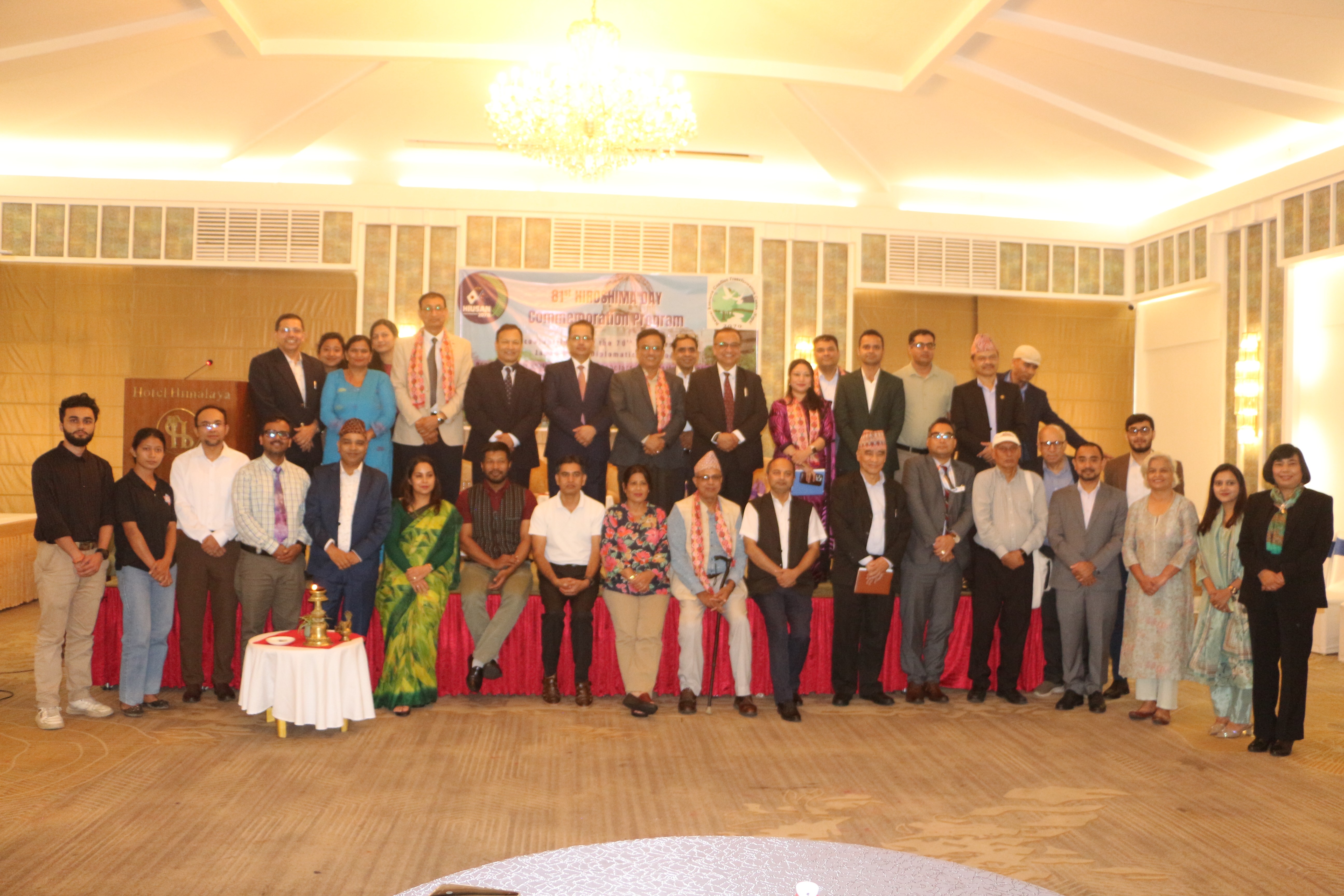
Kathmandu, August 6, 2026: The 81st Hiroshima Day Commemoration Program, themed “Global Peace, Education and Development: Pathways to a Sustainable Future,” was held today at Hotel Himalaya, Pulchowk, Lalitpur, with a strong call for peace, cooperation, education and responsible use of nuclear energy for human development.
The program was jointly organized by Hiroshima University Scholars’ Alumni Nepal (HiUSAN) and the Natural Resource Conflict Transformation Centre-Nepal (NRCTC-N) in conjunction with the 70th Anniversary of Japan–Nepal Diplomatic Relations.
The event brought together distinguished academics, government officials, diplomats, peace and conflict transformation practitioners, human rights advocates, civil society representatives, journalists, and members of HiUSAN and NRCTC-N to reflect on the legacy of Hiroshima and discuss pathways toward a peaceful and sustainable future.
The program was chaired by Dr. Ranjan Prakash Shrestha, Chairperson of HiUSAN. Prof. Dr. Janardan Lamichhane, Vice-Chancellor of the Nepal Academy of Science and Technology (NAST), attended the program as the Chief Guest.
Other distinguished guests included Prof. Dr. Bibek Acharya, Vice-Chancellor of the National Academy of Medical Sciences (NAMS); Mr. Bhrigu Dhungana, Joint Secretary at the Ministry of Foreign Affairs; Ms. Rojina Tamrakar, Executive Director of the Institute of Foreign Affairs; Prof. Dr. Manish Pokharel, Dean of the School of Engineering at Kathmandu University; Dr. Ram Chandra Bhusal, President of the JICA Alumni Association of Nepal; and Ms. Takeda Takako, First Secretary at the Embassy of Japan in Kathmandu, among others.
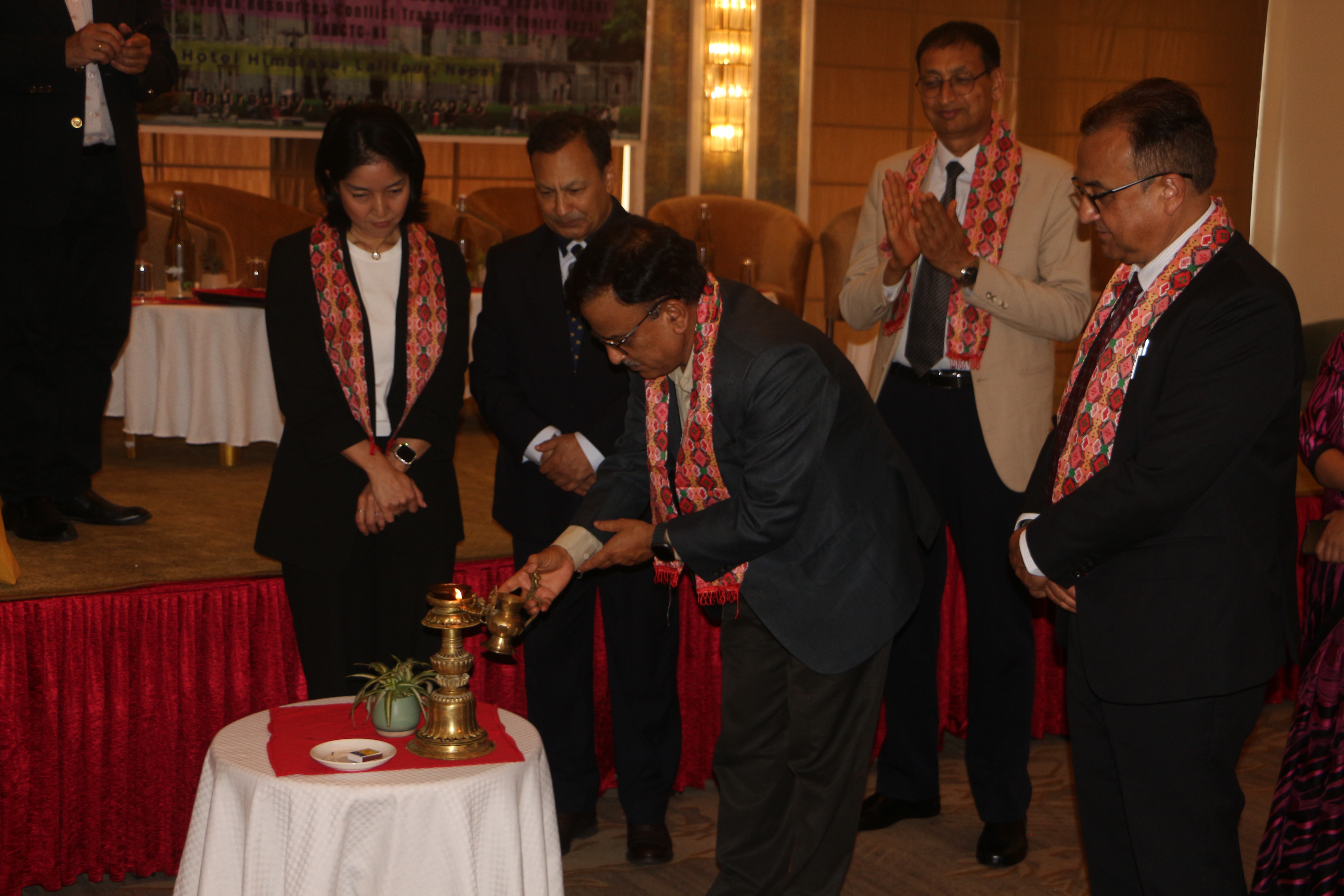
The program was inaugurated by Chief Guest Prof. Dr. Janardan Lamichhane, accompanied by distinguished guests. Video messages from Prof. Dr. Shinji Kaneko, Executive Vice President of Hiroshima University, Japan, and Mr. Takehiro Kagawa, Chairperson of the Hiroshima Peace Culture Foundation and Secretary General of Mayors for Peace, were also presented.
Delivering the keynote speech on “Nuclear Energy for Global Peace, Education and Development,” Prof. Dr. Manish Pokharel highlighted the importance of knowledge, education and responsible technological advancement in ensuring that scientific progress contributes to peace and sustainable development.
A major technical session featured a panel discussion on “Global Peace, Education and Development: Pathways to a Sustainable Future,” moderated by Dr. Ranjan Prakash Shrestha. The panel brought together Ms. Mohana Ansari, former Commissioner of the National Human Rights Commission and former Commissioner and Spokesperson of the National Women Commission; Dr. Pitambar Bhandari, Head of the Central Department of Conflict, Peace and Development Studies at Tribhuvan University; Dr. Naresh N. Rimal, Adjunct Faculty at Kathmandu University and Senior Fellow at ISET-Nepal; Mr. Chup Bahadur Thapa, mediation expert and Executive Direcotr of NRCTC-N; and Mr. Keshab Poudel, Chief Editor of New Spotlight Magazine.
The panel discussion explored the interconnected dimensions of peace, conflict transformation, human rights, education, development, environmental sustainability and the role of media in building peaceful and resilient societies.
Reflecting on the significance of Hiroshima, speakers emphasized that Hiroshima is not only a symbol of tragedy but also of resilience, recovery and hope. The commemoration highlighted the importance of remembering the consequences of war while transforming historical lessons into commitments for peace and human development.
The discussion also emphasized that nuclear energy, when supported by appropriate education, scientific knowledge, safeguards and responsible governance, can contribute to development and human well-being. At the same time, speakers stressed the importance of placing peace, human security and sustainability at the center of development efforts.
Speaking during the program, Mr. Bhrigu Dhungana, Joint Secretary at the Ministry of Foreign Affairs, Government of Nepal, underscored the importance of cooperation in sustaining peace. He emphasized the principle that peace cannot be kept by force alone, but can be maintained through cooperation, dialogue and mutual understanding.
The speakers further highlighted that peace and development are mutually reinforcing: peace today creates the foundation for progress tomorrow. Education, dialogue, cooperation, inclusive governance and responsible use of science and technology were identified as important pathways toward a sustainable future.
The program also featured remarks from Dr. Ram Chandra Bhusal of the JICA Alumni Association of Nepal, Prof. Dr. Bibek Acharya of NAMS, and other distinguished guests. The Chief Guest, Prof. Dr. Janardan Lamichhane, delivered the inaugural address, emphasizing the role of science, technology and education in promoting peace and development.
The occasion also included a felicitation of Dr. Rajan Ghimire, a newly graduated Ph.D. scholar from Peking University and Life Member of HiUSAN, in recognition of his academic achievement.
The program concluded with the distribution of tokens of appreciation to the Chief Guest, keynote speaker and panelists, followed by closing remarks and a vote of thanks by Ms. Kamala Pokharel, Treasurer of NRCTC-Nepal.
The 81st Hiroshima Day commemoration served as an important platform to remember the victims of Hiroshima and reaffirm a collective commitment to global peace, education, cooperation and sustainable development. It also reinforced the enduring friendship between Nepal and Japan, particularly as the two countries mark the 70th anniversary of their diplomatic relations.
“Peace today, progress tomorrow” emerged as a central message of the commemoration, reminding participants that sustainable development can only flourish where peace, cooperation, education and human dignity are upheld.